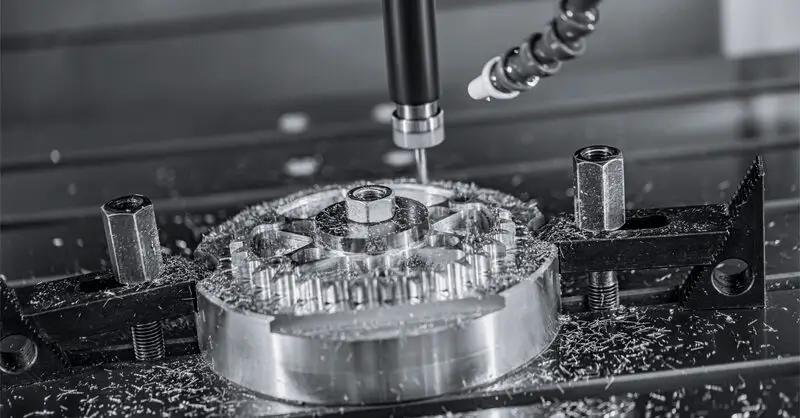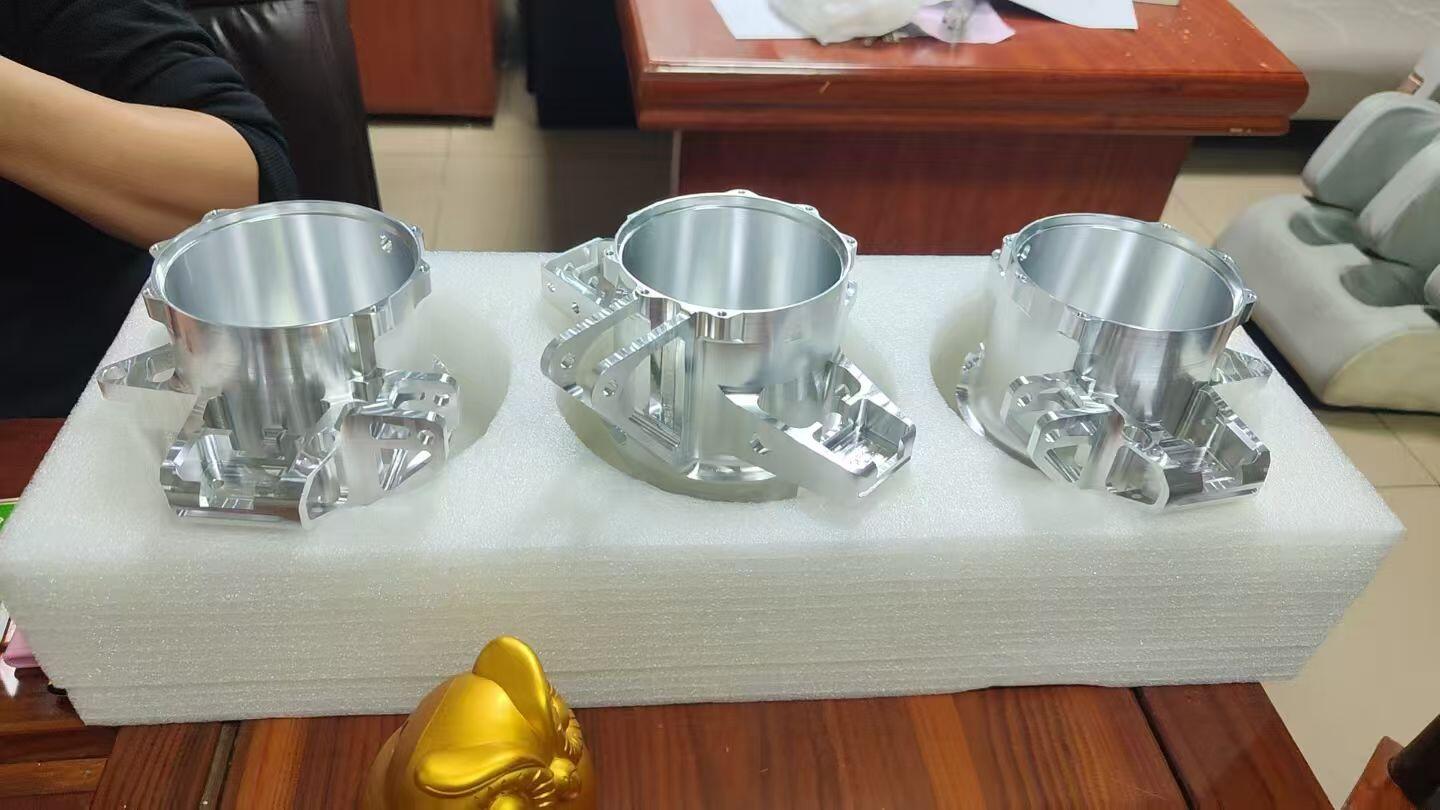

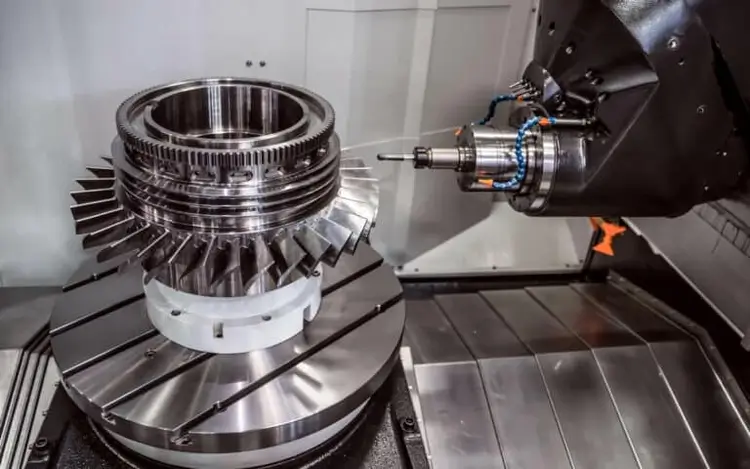
From CNC milling and CNC turning to advanced 5-axis machining, CNC technology enables manufacturers to produce functional parts for industries such as automotive, aerospace, medical, robotics, and industrial equipment. Understanding how CNC machining works, the types of CNC machines available, and suitable materials helps engineers select the right manufacturing method for their projects.
What Is CNC Machining?
CNC machining (Computer Numerical Control machining) is an automated manufacturing process that uses programmed computer instructions to control cutting tools and machine movements. By following digital designs such as CAD models and engineering drawings, CNC machines remove material from a workpiece to create finished parts with precise dimensions and complex features.
Unlike manual machining methods, CNC machining relies on pre-programmed tool paths, controlled cutting parameters, and automated operations to achieve consistent results. This subtractive manufacturing process is widely used for producing custom metal parts, prototypes, and production components that require accuracy, repeatability, and reliable quality.
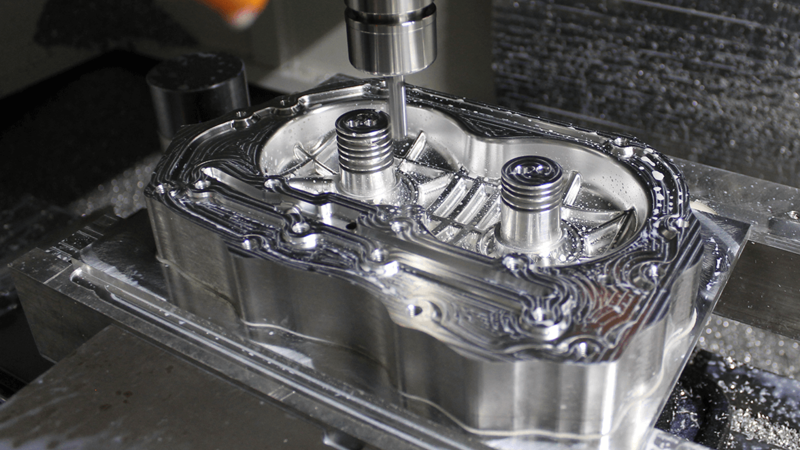
How Does CNC Machining Work?
The CNC machining workflow follows a systematic process that converts CAD designs into finished components through engineering review, CAM programming, machining operations, and quality verification. The following steps explain how each stage contributes to producing accurate and reliable CNC machined parts.
Step 1: Design Review and Technical Requirement Analysis
The CNC machining process begins with the review of part drawings, 3D CAD models, and engineering specifications. Engineers analyze the part requirements, including material selection, functional requirements, quantity, tolerances, and delivery expectations. This step ensures that all manufacturing requirements are clearly defined before production planning begins.
Step 2: DFM Analysis and Process Planning
During the Design for Manufacturability (DFM) review, engineers evaluate whether the part can be manufactured efficiently and reliably. This process includes analyzing part geometry, selecting suitable machining methods, evaluating tool accessibility, planning fixture setups, and optimizing machining strategies. Early DFM analysis helps reduce potential manufacturing issues, minimize setup time, and improve overall production efficiency.
Step 3: CAD Model Preparation and CAM Programming
After the design is confirmed, CAD models and engineering drawings are prepared with critical dimensions, tolerances, and feature requirements. CAM software is then used to generate machining programs by defining tool paths, cutting parameters, tool selection, and machining sequences. For complex parts, machining simulations help verify tool movement, avoid collisions, and optimize cutting performance.
Step 4: CNC Machine Setup and Machining Operations
Before machining begins, CNC machines are configured with the required cutting tools, fixtures, and workholding systems. The workpiece is accurately positioned and referenced to ensure machining precision. CNC milling, CNC turning, drilling, and multi-axis machining operations are then performed according to programmed instructions to create the required part features.
Step 5: In-Process Inspection and Quality Control
During production, critical dimensions and machining conditions are monitored to maintain consistent quality. For precision components, processes such as first article inspection (FAI), dimensional checks, and in-process verification help identify potential issues early and ensure parts remain within specified tolerances.
Step 6: Deburring and Surface Finishing
After machining, parts undergo secondary processes such as deburring, cleaning, and surface finishing based on material requirements and application needs. Common finishing options include anodizing, sandblasting, passivation, and plating, which can improve surface appearance, corrosion resistance, and functional performance.
Step 7: Final Inspection and Delivery
Before shipment, finished parts are inspected using measurement equipment such as coordinate measuring machines (CMM), surface roughness testers, and vision inspection systems. Final inspection reports verify that parts meet engineering specifications before careful packaging and delivery for assembly or further manufacturing processes.
Types of CNC Machining
CNC machining includes several manufacturing processes that use computer-controlled machines to create precision parts with different geometries and feature requirements. Professional CNC machining services help manufacturers produce complex metal components with high accuracy and consistency. The following sections introduce the most common CNC machining methods, including milling, turning, 5-axis machining, and mill-turn operations.
CNC Milling
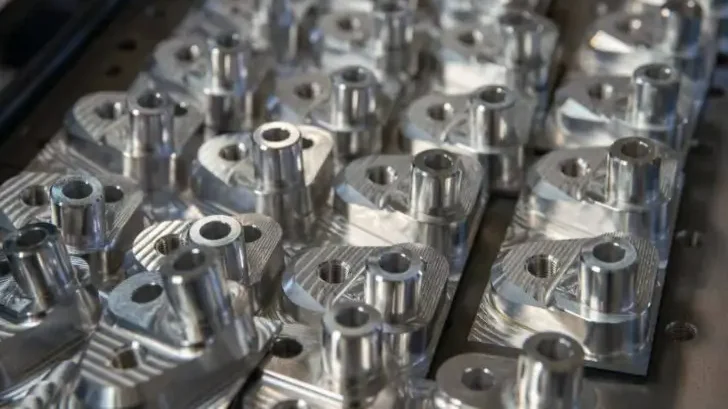
CNC milling is a machining process that uses rotating cutting tools to remove material from a stationary workpiece. It is widely used to create features such as pockets, slots, holes, contours, and complex 3D surfaces on components including housings, brackets, plates, and fixtures.
Different CNC milling configurations, including 3-axis, 4-axis, and 5-axis machining, provide flexibility for parts with varying levels of complexity. Multi-axis milling allows more efficient machining of complex geometries while reducing setups and maintaining dimensional accuracy.
CNC Turning
CNC turning is a machining process where the workpiece rotates while cutting tools remove material to create cylindrical and rotational components. It is commonly used for shafts, bushings, sleeves, pins, connectors, and threaded parts that require accurate diameters, concentricity, and surface finishes.
CNC turning is ideal for producing rotational parts with consistent dimensions and repeatable quality. Advanced turning capabilities can support complex geometries, tight tolerances, and efficient production of precision components.
5-Axis CNC Machining
5-axis CNC machining enables cutting tools to move across multiple axes simultaneously, allowing complex parts with angled surfaces, deep cavities, undercuts, and challenging geometries to be produced with fewer setups.
By improving tool accessibility and reducing repositioning, 5-axis machining helps minimize tolerance accumulation and achieve higher dimensional accuracy for complex precision components.
CNC Mill-Turn Machining
CNC mill-turn machining combines turning and milling operations within a single setup, allowing parts with rotational features, milled surfaces, holes, and complex profiles to be completed in one machining process.
This integrated approach reduces part handling, improves machining efficiency, and helps maintain accurate feature relationships for complex metal components requiring multiple manufacturing operations.
Materials Used in CNC Machining
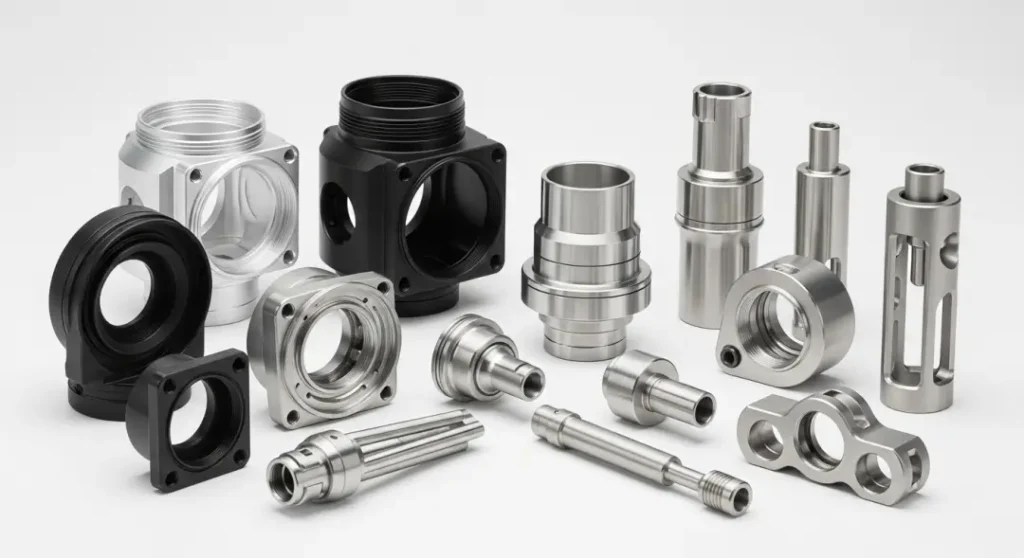
CNC machining supports a wide range of engineering materials, allowing manufacturers to produce parts with different performance requirements. The most common materials include aluminum, stainless steel, steel, brass, copper, titanium, and other metal alloys.
Material selection depends on factors such as part function, mechanical requirements, weight, corrosion resistance, and application environment. Choosing the right material helps ensure the final CNC machined parts achieve the required performance and durability.
Advantages of CNC Machining
CNC machining offers several advantages for producing precision parts with different design requirements and manufacturing needs. The following sections explain how CNC technology improves part quality, design flexibility, material compatibility, and production efficiency through advanced automation and process control.
High Accuracy and Repeatability: CNC machines follow programmed instructions with precise tool movement and controlled machining parameters, ensuring consistent dimensions across prototype and production runs while reducing part variation and rework.
Complex Geometries and Tight Tolerances: Advanced CNC machining capabilities, including multi-axis operations, enable the production of complex features such as curved surfaces, deep cavities, pockets, and multi-face structures while maintaining accurate dimensional control.
Efficient Material Usage: Optimized cutting strategies, tooling selection, and machining parameters help reduce unnecessary material waste and improve overall manufacturing efficiency during the machining process.
Wide Material Compatibility: CNC machining can process a broad range of engineering materials, including aluminum, stainless steel, brass, copper, titanium, and alloy steels, allowing manufacturers to select suitable materials based on strength, weight, durability, and application requirements.
Flexible Production Volumes: CNC machining supports different production needs, from prototype development and small-batch manufacturing to larger production runs. Digital programming allows efficient design updates and process adjustments for changing project requirements.
Consistent Surface Finish: Precise tool control and optimized cutting conditions enable CNC machines to achieve consistent surface finishes, while additional finishing processes can further enhance appearance, corrosion resistance, and functional performance.
Limitations of CNC Machining
While CNC machining provides excellent accuracy, flexibility, and material compatibility, it also has certain limitations depending on part design, production requirements, and manufacturing goals. Understanding these factors helps engineers select the most suitable manufacturing method for their specific applications.
Higher Initial Setup Requirements: CNC machining requires CAD programming, tooling selection, fixture preparation, and machine setup before production begins. For simple parts or very small quantities, these preparation steps may increase the initial manufacturing cost.
Material Removal and Waste: As a subtractive manufacturing process, CNC machining removes material from a solid workpiece to create the final part. This can result in more material waste compared with additive manufacturing methods, especially when machining complex shapes from expensive materials.
Design Accessibility Limitations: Although multi-axis CNC machines can produce complex geometries, certain internal features, deep cavities, or difficult-to-reach areas may still require specialized tooling or alternative manufacturing approaches.
Not Always Ideal for Extremely High Volumes: CNC machining is suitable for prototypes, custom parts, and low-to-medium production volumes. For extremely high-volume production, processes such as injection molding or die casting may offer better cost efficiency after initial tooling investment.
Applications of CNC Machining
CNC machining is widely used in industries that require precision components, complex geometries, and reliable manufacturing performance. The following sections introduce common applications of CNC machined parts across different industries, highlighting how CNC technology supports the production of functional prototypes and production-ready components.
Aerospace: CNC machining is used to produce aerospace components such as brackets, housings, and structural parts that require lightweight materials, complex geometries, and strict dimensional accuracy.
Automotive: CNC machined parts are commonly used for engine components, transmission parts, suspension elements, and custom fixtures where durability, consistency, and reliable performance are required.
Medical Devices: Medical components such as surgical instruments, diagnostic equipment parts, and precision devices require accurate dimensions, smooth surface finishes, and strict quality control.
Electronics and Robotics: CNC machining supports the production of custom enclosures, mounting brackets, connectors, and structural components that require precise assembly and reliable operation.
Industrial Machinery: CNC machining is widely used for manufacturing machine components, tooling, fixtures, housings, and structural parts that require high strength, dimensional accuracy, and reliable performance in industrial applications.
Energy Equipment: CNC machined components for pumps, turbines, and energy systems require precise manufacturing, durable materials, and consistent quality to withstand demanding operating conditions.
Choosing a CNC Machining Partner
Selecting the right CNC machining partner involves more than comparing machining capabilities and pricing. For engineering teams and OEM manufacturers, a reliable supplier should provide strong technical expertise, consistent quality control, and the ability to support projects from initial design validation through production manufacturing.
An experienced CNC machining partner should be capable of reviewing engineering drawings, providing Design for Manufacturability (DFM) feedback, selecting suitable machining processes, and identifying potential production challenges before manufacturing begins. These engineering capabilities help reduce development risks, improve part quality, and shorten time to market.
Beyond machining accuracy, production reliability is also critical for long-term cooperation. Factors such as process control, inspection capability, material expertise, production capacity, and delivery performance all contribute to consistent results across prototype and production orders.
Choosing a CNC machining supplier with both manufacturing capability and engineering experience, especially a reliable China manufacturing services provider, helps ensure that complex metal components are produced efficiently, meet required specifications, and perform reliably in their final applications.
Why Choose ZH Precision for CNC Machining
ZH Precision provides custom CNC machining solutions for OEM manufacturers and engineering teams requiring precision metal components, reliable quality, and consistent production performance. With ISO 9001:2015 and IATF 16949:2016 certified quality systems, we maintain strict process control throughout machining, inspection, and final delivery.
Equipped with advanced CNC machining capabilities, including 3-axis, 4-axis, and 5-axis milling, CNC turning, and mill-turn machining, ZH Precision supports projects ranging from CNC prototypes to production manufacturing. Our engineering team works closely with customers to review designs, optimize manufacturability, and select suitable machining processes for complex metal parts.
With more than 30 advanced CNC machines and comprehensive inspection capabilities, ZH Precision delivers precision components with controlled tolerances, stable quality, and dependable delivery performance. From initial development to ongoing production, we help customers reduce manufacturing risks and bring high-quality metal parts to market efficiently.
Conclusion
CNC machining is a versatile manufacturing process that enables the production of precision metal parts with complex geometries, tight tolerances, and consistent quality. From initial design review and CNC programming to machining, inspection, and finishing, each stage plays an important role in achieving reliable manufacturing results.
With capabilities including CNC milling, CNC turning, multi-axis machining, and support for a wide range of engineering materials, CNC machining provides flexible solutions for prototype development, custom components, and production manufacturing.
Understanding the CNC machining process, available machining methods, material options, and supplier capabilities helps engineers and manufacturers make better decisions when developing precision parts for their applications.
FAQ
CNC machining is used to manufacture precision metal parts with complex geometries and tight tolerances. Common applications include automotive components, aerospace parts, medical devices, robotics components, industrial equipment, housings, brackets, and fixtures.
CNC milling uses rotating cutting tools to remove material from a stationary workpiece and is suitable for parts with flat surfaces, pockets, slots, holes, and complex features. CNC turning rotates the workpiece while cutting tools remove material, making it ideal for cylindrical and rotational components such as shafts, bushings, and threaded parts.
Yes. CNC machining is suitable for both prototype development and production manufacturing. It allows engineers to quickly produce functional prototypes for design validation and scale to repeatable production of custom metal components.
The achievable tolerance depends on factors such as part geometry, material, machining process, and equipment capability. Precision CNC machining can achieve tight dimensional control for components requiring accurate fits and critical features.