
Custom CNC Turning Services
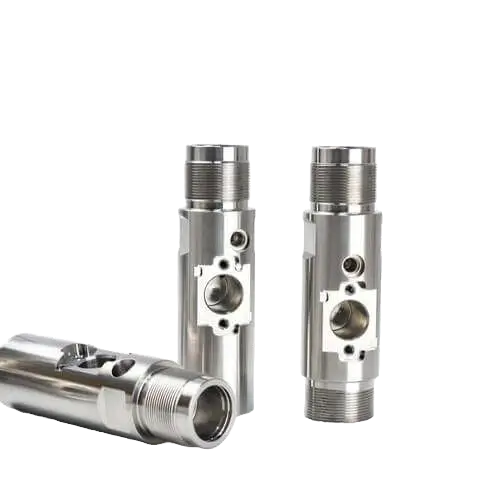
ZH Precision offers custom CNC turning services for precision components with demanding specifications. We manufacture CNC turned parts according to your drawings and requirements.
- Factory-Direct Pricing & Free DFM Review
- Dedicated Engineering Support
- Fast Turnaround & Flexible Production
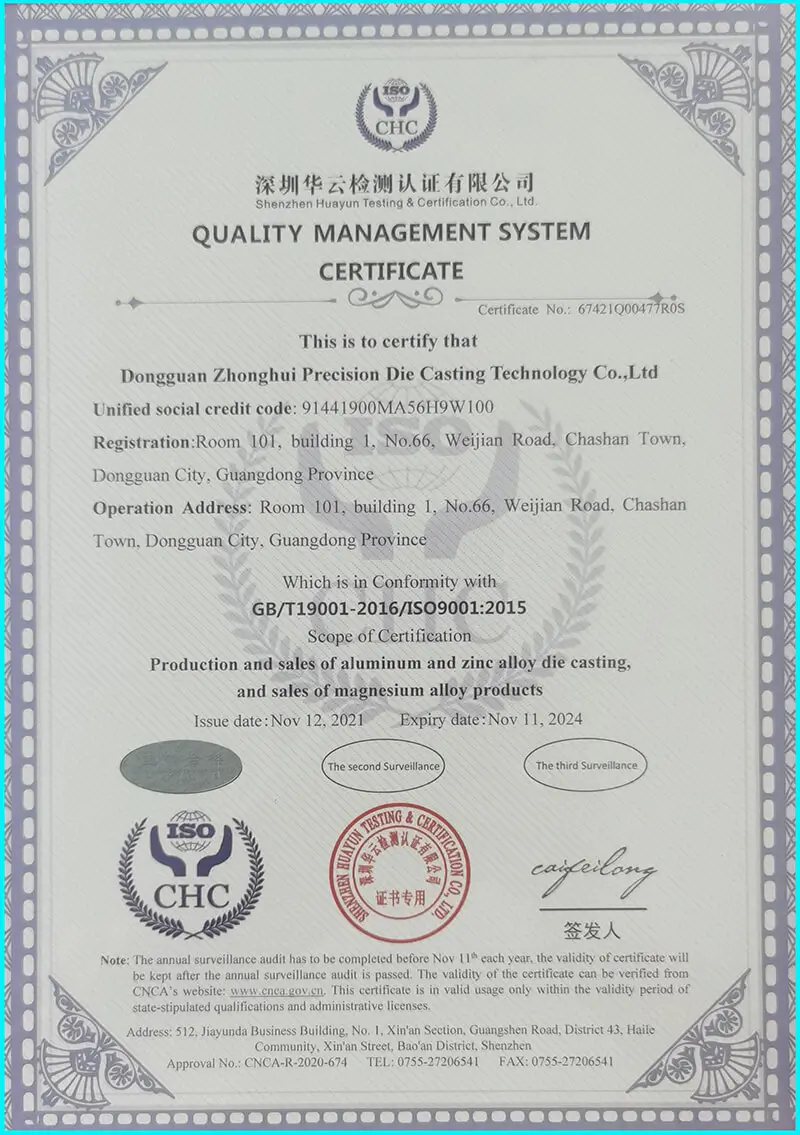
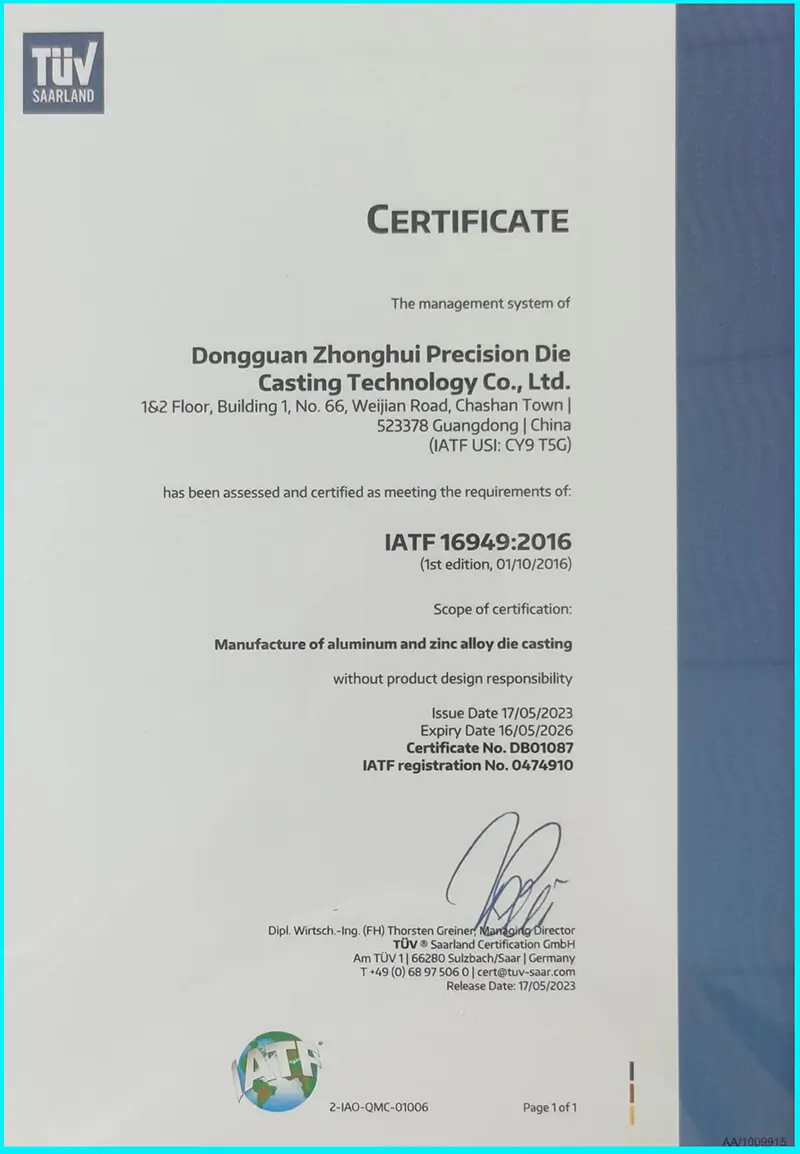
Quality Certifications
ISO 9001:2015 | IATF 16949:2016
Get a Free DFM Assessment
STP I SLDPRT I IPT I PRT I SAT FLES
All uploaded content is secure and confidential.
Home » CNC Turning
Trusted by companies like


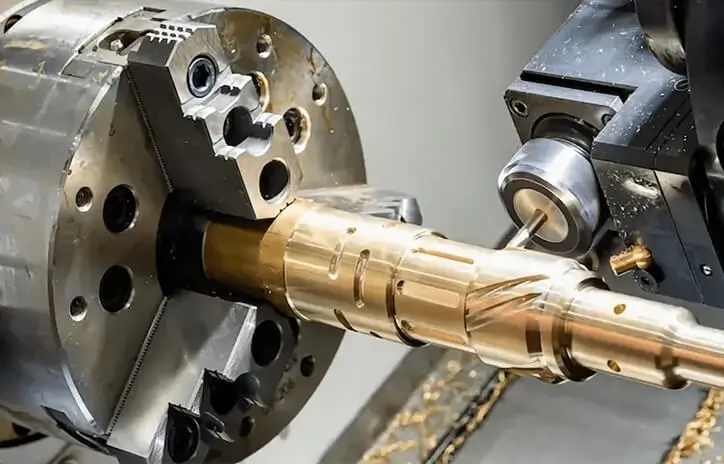
CNC Turning with ZH Precision
At ZH Precision, we specialize in precision CNC turning services for customers worldwide. As an ISO 9001:2015 and IATF 16949:2016 certified manufacturer with over 15 years of machining experience, we produce custom turned parts to your exact drawings and specifications. Our proven processes deliver consistent quality, tight tolerances and reliable performance across diverse industrial applications.
From prototype development to full-volume production, we scale our services to fit your project needs. Our in-house engineering team provides dedicated technical support and tailored turning solutions, delivering cost-effective, dependable precision components for every requirement.
CNC Turning for Every Production Stage
Our CNC turning services span the full production lifecycle, from prototype development through to full-volume manufacturing, supporting a smooth transition from design validation to ongoing serial production.
Prototype CNC Turning
Prototype CNC turning allows engineers to verify part designs prior to full production. We machine prototype turned parts to your exact drawings, enabling dimensional checks, assembly testing and design refinements to avoid costly adjustments later in the production cycle.
Learn MoreProduction CNC Turning
Production CNC turning delivers consistent, repeatable manufacturing for steady component supply. We produce turned parts to your specifications with controlled, standardized processes, ensuring uniform dimensions and stable quality across all recurring production orders.
Learn MoreGet a Quote for CNC Milled Parts Today
Send us your CAD files and part requirements. Our engineering team will review your project and provide a fast quote for custom CNC milled parts.
CNC Turning Tolerances
Our precision CNC turning achieves dimensional tolerances as tight as ±0.01 mm, subject to part geometry, material and production requirements. Standard parts follow ISO 2768, with tighter tolerances available on request.
| Specification | CNC Turning Capability |
|---|---|
| Max Turning Diameter | Ø 200 mm |
| Max Turning Length | 500 mm |
| Minimum Turning Diameter | Ø 1 mm |
| Dimensional Tolerance | ± 0.01 mm |
| General Tolerance | ISO 2768 |
CNC Turning Materials
A variety of metal materials are available for CNC turning, including aluminum, stainless steel, steel, brass, copper, and titanium. Material selection can be tailored to part requirements such as strength, corrosion resistance, machinability, and application conditions.


🔍 Need help selecting the right material? Our engineers can recommend suitable materials based on part function, machining requirements, operating conditions, and production needs.
Surface Finishes for CNC Turned Parts
Surface finishing enhances CNC turned parts’ appearance, corrosion resistance and wear performance post-machining. Common treatments include anodizing, polishing, electroplating and passivation, selected based on part material, functional requirements and end-use operating environment.
As-Machined
Native finish straight from the lathe with natural tool marks; no secondary processing, the most economical choice for basic functional parts.
Anodizing
Forms a protective oxide layer on aluminum parts; boosts corrosion and wear resistance, with optional colors for cosmetic needs.
Electroplating
Deposits a thin metal coating (zinc, nickel, chromium); enhances surface hardness, corrosion resistance and conductivity.
Passivation
Chemical treatment for stainless steel parts; removes surface free iron to boost natural corrosion resistance without dimensional change.
Polishing
Mechanical smoothing of turned surfaces; reduces roughness, lowers friction and meets sanitary or cosmetic finish requirements.
Black Oxide
Creates a thin black oxide film on steel parts; provides mild corrosion protection and a uniform matte black low-glare appearance.
Electroless Nickel Plating
Applies a uniform nickel-phosphorus layer without current; delivers consistent thickness and strong wear/corrosion resistance.
Sandblasting
Blasts surfaces with abrasive media for a uniform matte texture; removes machining marks and prepares surfaces for subsequent coating.
CNC Turning DFM Guidelines
CNC turning design guidelines help improve part machinability and reduce unnecessary processing requirements. Key considerations include geometry, wall thickness, tolerances, bore depth-to-diameter ratios, undercuts, and thread standards.
| DFM Guideline | Recommended Practice |
|---|---|
| Part Geometry | Design rotationally symmetric parts with simple cylindrical features to reduce machining complexity. |
| Part Length | Avoid excessive length-to-diameter ratios to improve machining stability and reduce part deflection. |
| Wall Thickness | Maintain sufficient wall thickness for thin-walled parts to prevent deformation during machining. |
| Internal Features | Consider practical bore depths and internal features to ensure proper tool access and reliable machining. |
| Threads | Use standard thread sizes whenever possible to simplify machining and inspection. |
| Tolerance Requirements | Apply tight tolerances only to critical features to balance performance requirements and manufacturing cost. |
Why Engineers Choose ZH Precision
With our own CNC turning facility and experienced machining team, ZH Precision provides direct manufacturing support, transparent pricing, and reliable CNC turning solutions with consistent part quality.
Precision Turning Parts
Produce CNC turned parts with tight dimensional control and tolerances as tight as ±0.01 mm, supporting accurate fit and reliable performance.
Engineering Support
Our experienced machining team provides practical guidance on part requirements, machining considerations, and manufacturing solutions.
Fast Lead Time
Efficient CNC turning processes and in-house production capabilities help reduce turnaround time while maintaining required specifications.
What Is CNC Turning?
CNC turning is a machining process that uses computer-controlled lathes to rotate a workpiece while cutting tools remove material from the surface. This process creates precise cylindrical features such as shafts, bushings, pins, and other turned components with accurate dimensions.
During CNC turning, cutting tools move along programmed paths to perform operations including facing, threading, grooving, drilling, and boring. The process is widely used for manufacturing precision parts that require consistent geometry, tight tolerances, and repeatable machining results.
Advantages of CNC Turning
1.Precision and Accuracy: CNC turning machines achieve tight dimensional tolerances, helping produce turned components with accurate features and reliable assembly performance.
2.Machining Efficiency: Once programmed and set up, CNC lathes perform machining operations efficiently with consistent results and reduced processing time.
3.Design Flexibility: CNC turning supports various rotational features, including shafts, threads, grooves, and bores, to meet different part requirements.
4.Repeatability: Computer-controlled machining ensures consistent dimensions and stable results across multiple CNC turned parts.
5.Material Compatibility: CNC turning processes a wide range of metal materials, including aluminum, stainless steel, steel, brass, copper, and titanium.
How CNC Turning Works
1.Workpiece Rotation: The workpiece is securely clamped in the CNC lathe and rotates at a controlled speed during machining.
2.Tool Movement: Cutting tools move along programmed paths to remove material from the rotating workpiece and create the required part features.
3.Material Removal: Different cutting operations, such as turning, facing, threading, grooving, and boring, are performed to achieve the specified geometry.
4.CNC Control System: The machine controller manages tool movement, cutting parameters, and machining sequences based on programmed instructions.
5.Final Part Formation: Multiple machining operations work together to produce precise cylindrical components with the required dimensions and features.
Frequently Asked Questions
We support a wide range of machining materials for CNC turning, including aluminum, stainless steel, carbon steel, copper, brass, titanium, and engineering plastics such as POM and nylon. All materials comply with industrial standard specifications, and we can select the most suitable material according to your product usage scenario, hardness and corrosion resistance requirements.