
Custom CNC Milling Services
ZH Precision provides CNC milling services with competitive pricing. With advanced CNC machining equipment and 3-, 4-, and 5-axis machining capabilities, we support custom parts manufacturing from simple components to complex geometries with fast turnaround.
- Factory-Direct Pricing & Free DFM Review
- Dedicated Engineering Support
- Fast Turnaround & Flexible Production
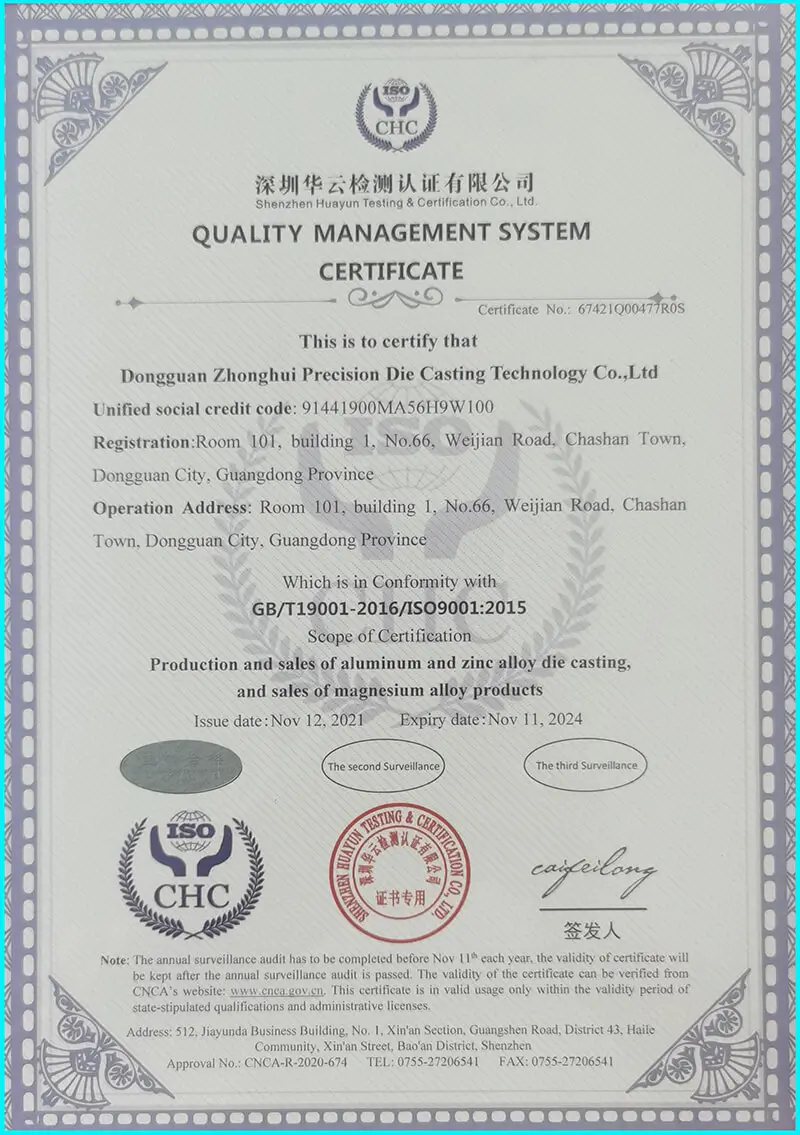
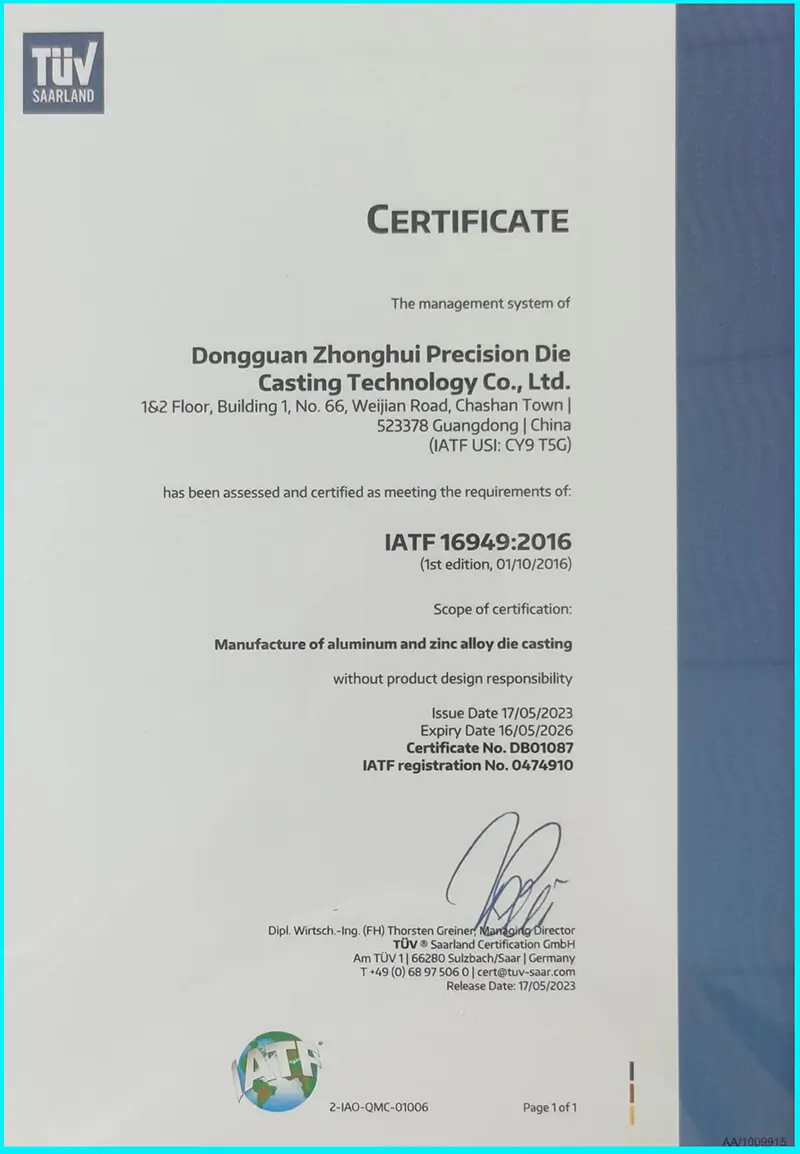
Quality Certifications
ISO 9001:2015 | IATF 16949:2016
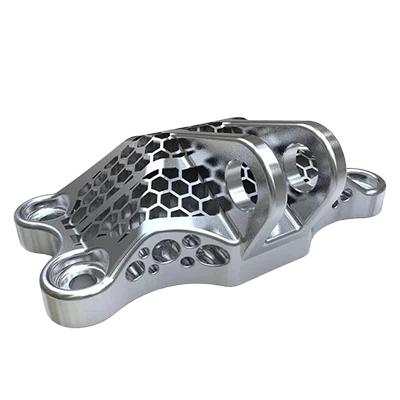
Get a Free DFM Assessment
STP I SLDPRT I IPT I PRT I SAT FLES
All uploaded content is secure and confidential.
Home » CNC Milling
Trusted by companies like


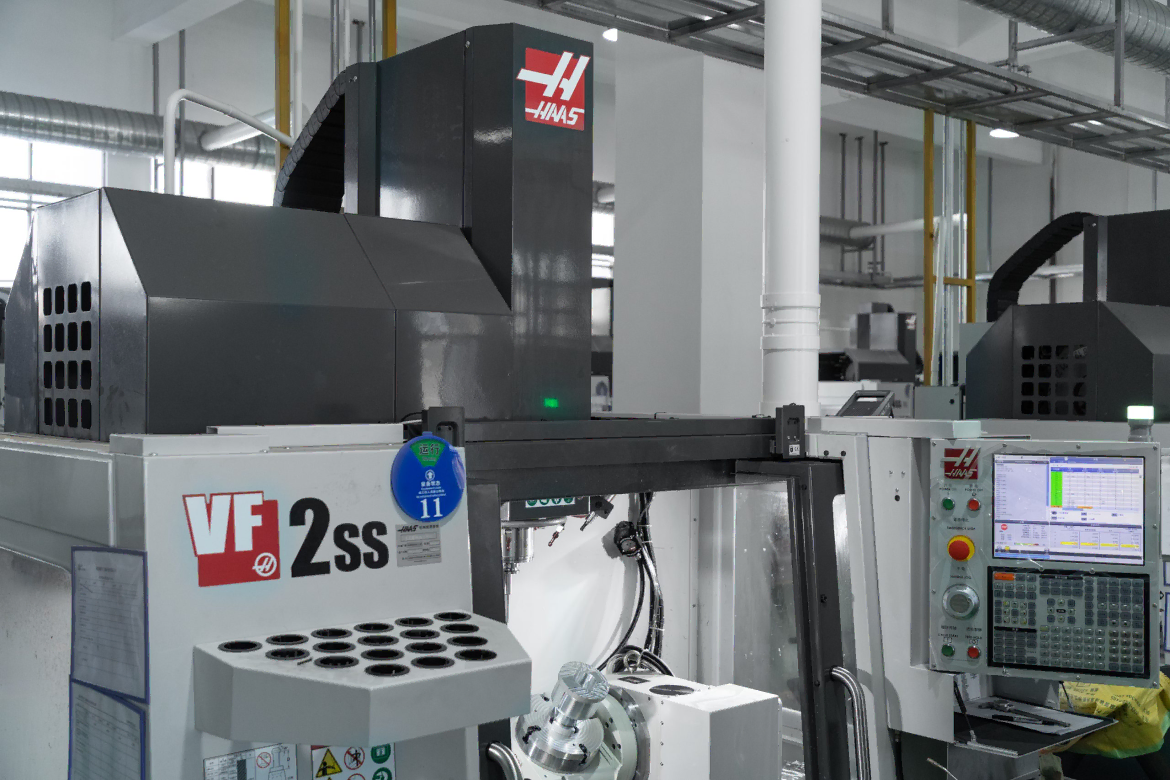
On-demand CNC Milling Services by ZH Precision
ZH Precision is an ISO 9001:2015 and IATF 16949:2016 certified CNC milling manufacturer, delivering flexible on-demand CNC milling for custom metal parts. Our 30+ advanced 3-axis, 4-axis and 5-axis machining centers produce complex parts with tight dimensional tolerances down to ±0.01mm.
Our full CNC milling process includes engineering review, DFM validation, CNC programming, precision machining, quality inspection and custom surface finishing. We serve global OEMs and manufacturers with standardized manufacturing for prototyping, low-volume and recurring batch production.
Custom CNC Milling Services for Diverse Designs
Custom CNC milling serves all kinds of custom part designs, covering non-standard shapes, unique structures and application-specific components. Flexible machining adapts to your individual drawings and functional requirements.
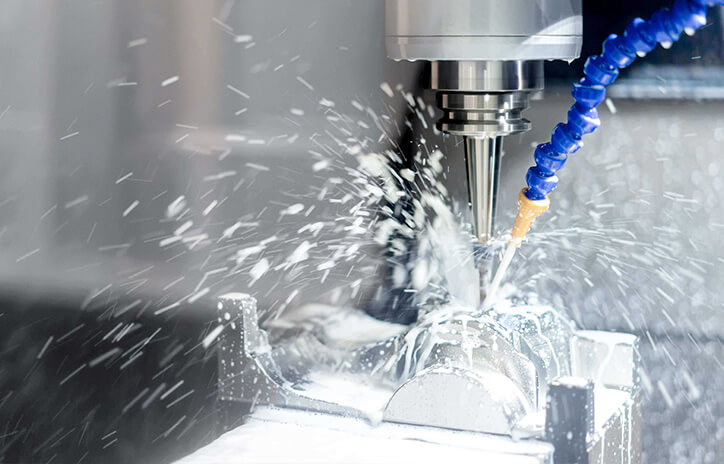
3-Axis CNC Machining Services
3-axis CNC milling uses three linear axes (X, Y, and Z) to machine a workpiece through controlled cutting operations. It is commonly used for parts with flat surfaces, pockets, slots, holes, and standard geometrical features.
It provides a cost-effective solution for custom metal parts with simple structures and supports prototype parts, low-volume production, and repeat manufacturing without multi-angle machining.
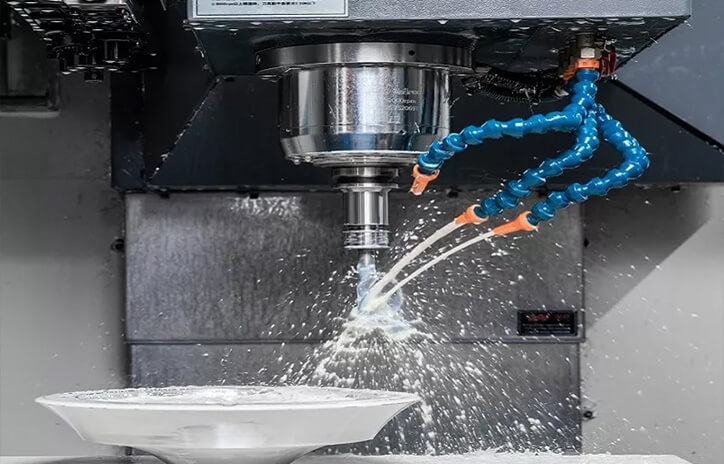
4-Axis CNC Machining Services
4-axis CNC milling is an advanced machining process that adds a rotational axis (A-axis) to the standard X, Y, and Z axes. This allows the workpiece to rotate during machining, enabling access to multiple sides of a part without manual repositioning.
It enables flexible multi-sided and angled machining, eliminating repeated clamping errors. It boosts machining efficiency and part consistency for your medium-complex custom components.
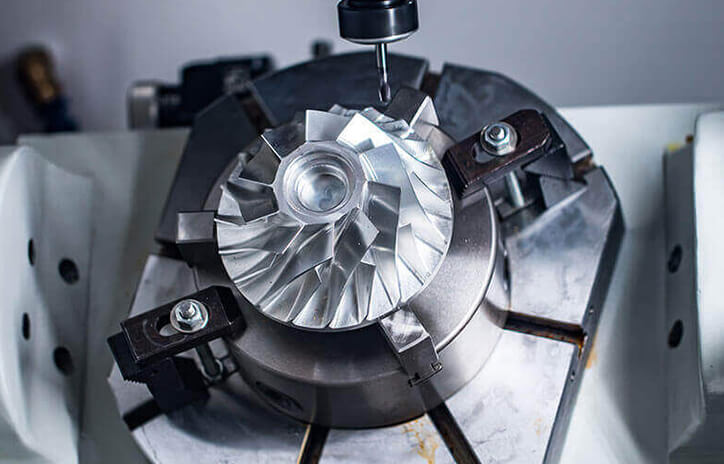
5-Axis CNC Machining Services
5-axis CNC machining is an advanced milling process that combines three linear axes (X, Y, and Z) with two rotational axes to machine complex parts from multiple angles in a single setup. This capability enables precise machining of curved surfaces, deep cavities, and intricate geometries.
It achieves one-setup machining for ultra-complex parts, eliminating dead angles. It delivers excellent surface finish and ultra-high precision for your most demanding custom components.
Custom CNC Milling Solutions
We offer custom CNC milling solutions ranging from rapid prototyping to low-volume production. Our full milling capacity allows engineers to verify designs, improve functional performance, and manufacture consistent custom components for diverse industries.
CNC Prototyping Services
CNC prototyping services enable fast design validation and functional testing for custom CNC parts, helping engineers verify form, fit, and function before production.
Learn MoreLow-Volume CNC Manufacturing
Low-volume CNC manufacturing supports pilot runs and small production quantities with stable quality, tight tolerances, and flexible production requirements.
Learn MoreGet a Quote for CNC Milled Parts Today
Send us your CAD files and part requirements. Our engineering team will review your project and provide a fast quote for custom CNC milled parts.
Tolerances for Precision CNC Milling
Our CNC milling process achieves tight tolerances as low as ±0.01 mm for precision parts. All machining adheres to your GD&T drawing requirements, follows ISO 2768 for standard dimensional limits, and complies with ASME Y14.5 GD&T standards upon request.
| Specification | 3-Axis | 4-Axis | 5-Axis |
|---|---|---|---|
| Maximum Part Size | 1000 × 500 × 500 mm | 1000 × 500 × 500 mm | 650 × 650 × 450 mm |
| Minimum Feature Size | 1 mm | 1 mm | 0.5 mm |
| General Tolerance | ±0.05 mm | ±0.05 mm | ±0.05 mm |
| Precision Tolerance | Down to ±0.01 mm | Down to ±0.01 mm | Down to ±0.01 mm |
| Typical Lead Time | 3–5 business days | 5–10 business days | 5–10 business days |
CNC Milling Materials for Custom Parts
CNC milling supports a wide range of metal materials, including aluminum, stainless steel, brass, and titanium for custom milled parts. Complete material certificates and traceability documents are available upon request.


🔍 Need help selecting the right material? Our engineers provide DFM feedback and material recommendations based on machining requirements, performance needs, and application conditions.
Surface Finishes for CNC Milled Parts
At ZH Precision, we supply full surface finishes for CNC milled parts including anodizing, polishing, plating, powder coating and passivation. These treatments boost aesthetics and durability, with inspection records to ensure consistent finishing quality.
After processing
Basic post-processing removes tool burrs and sharp edges, smoothing part surfaces to ensure stable assembly quality and prepare parts for advanced surface treatment.
Anodizing
Polishing removes minor tool marks and surface flaws, delivering a smooth and glossy metal finish to enhance part appearance and assembly accuracy.
Polishing
Polishing removes minor tool marks and surface flaws, delivering a smooth and glossy metal finish to enhance part appearance and assembly accuracy.
Sand Blasting
Sand blasting removes surface oxides and impurities, forming a uniform matte texture that greatly improves coating adhesion and part consistency.
Tumbling
Tumbling performs batch deburring and edge rounding, smoothing part surfaces efficiently with low cost for standardized finished components.
Electropolish
Electropolishing achieves ultra-smooth and bright metal surfaces through electrochemical treatment, optimizing surface cleanliness and corrosion resistance.
Alodine
Alodine treatment forms a thin protective coating on aluminum parts, improving corrosion resistance and paint adhesion without affecting dimensional tolerances.
Electroplating
Electroplating deposits uniform metal coatings on workpiece surfaces to enhance part hardness, wear resistance and overall anti-corrosion performance.
Design Guidelines for CNC Milling
Effective CNC milling design improves machinability, reduces manufacturing costs, and supports consistent part quality. Considerations such as tool access, internal radii, wall thickness, hole design, and tolerance requirements help ensure efficient and reliable production.
| DFM Guideline | Recommended Practice |
|---|---|
| Material Selection | Select suitable metal materials based on strength, weight, corrosion resistance, and application requirements. |
| Part Geometry | Design parts with accessible features and avoid unnecessary complex structures to improve machining efficiency. |
| Internal Radii | Use proper corner radii to accommodate CNC cutting tools and improve machining stability. |
| Wall Thickness | Maintain sufficient wall thickness to reduce deformation and improve part rigidity during machining. |
| Hole & Thread Design | Use standard hole sizes and thread specifications whenever possible for reliable machining. |
| Tolerance Requirements | Apply tight tolerances only to critical features to balance precision requirements and manufacturing cost. |
What Is CNC Milling?
CNC milling is a precision subtractive machining process that leverages computer-programmed cutting tools to carve custom components out of solid metal blanks following CAD digital models. Controlled by pre-set programs, cutters travel along multiple axes to machine precise dimensions, intricate contours and functional features with stable accuracy.
Widely adopted in automotive, electronics, automation and industrial machinery industries, CNC milling fabricates bespoke metal prototypes and production parts. 3-axis, 4-axis and 5-axis milling centers are deployed according to part complexity, delivering varying degrees of machining freedom and tight tolerance performance.
How CNC Milling Works
1.Designing: Designers create detailed 3D digital models via CAD software, covering complete part features, exact dimensions and required tolerances.
2.G-code Generation: CAM software translates CAD models into G-code, the universal programming language that defines tool paths, cutting speeds and machining coordinates for CNC equipment.
3.Machine Setup: Technicians fit matched cutting tools, clamp workpieces firmly and calibrate operating parameters as directed by G-code.
4.Automated Machining: The machine follows G-code commands. High-speed spinning cutters travel along multiple axes to cut excess material off blanks and form precise geometries.
5.Inspection & Post-Treatment: Machined parts undergo dimensional accuracy checks. Additional processes including deburring, polishing and surface finishing are applied to meet drawing specifications.
Advantages of CNC Milling
High Precision: CNC milling uses computer-controlled movements to achieve tight dimensional tolerances and consistent part accuracy.
Complex Machining Capability: Multi-axis CNC milling enables the machining of complex geometries, angled features, and multi-sided components.
Excellent Repeatability: Programmed machining operations allow identical parts to be produced consistently across multiple production runs.
Wide Material Compatibility: CNC milling can process a broad range of engineering metals, including aluminum, stainless steel, steel, brass, copper, and titanium.
Design Flexibility: CNC milling supports various part designs, from simple machined features to complex precision components.
Frequently Asked Questions
ZH Precision’s CNC team combines experienced process engineers and skilled machinists to optimize machining processes, reduce unnecessary operations, and improve CNC program efficiency. This helps shorten cycle times, enhance surface finishes, and deliver consistent precision metal components.
CNC milling and CNC turning use different machining methods to create precision parts. CNC milling uses rotating cutting tools to remove material from a fixed workpiece, making it suitable for complex geometries, pockets, slots, and multi-sided features. CNC turning rotates the workpiece while a stationary cutting tool removes material, making it ideal for cylindrical parts such as shafts, bushings, and threaded components. The best process depends on the part geometry, material, and functional requirements.
The delivery time for CNC milled parts depends on part complexity, material availability, quantity, surface finishing, and inspection requirements. For standard projects, ZH Precision can provide rapid turnaround for prototypes and small-batch production, with typical delivery ranging from a few days to several weeks depending on project specifications. Our engineering team works closely with customers to optimize production planning and shorten lead times.
CNC milling costs can be reduced by optimizing part design, selecting suitable tolerances, reducing unnecessary machining operations, and choosing cost-effective materials. Simplifying complex features, minimizing setups, and considering production volume during the design stage can also improve machining efficiency. ZH Precision provides DFM feedback to help customers identify opportunities to reduce machining time and overall manufacturing costs.
CNC milling tolerances depend on the part design, material, machine capability, and production requirements. ZH Precision can achieve tight machining tolerances for precision components, with standard CNC milling tolerances typically reaching ±0.025 mm and tighter tolerances available for specific applications. Our inspection process helps verify dimensional accuracy and ensure parts meet customer specifications.